The Alaskan Klee Kai is a purebred dog developed in Alaska by Linda Spurlin in the 1970s. It is a companion-sized dog meant to resemble Alaska's own working dog, the Alaskan Husky, a landrace-like breed used for their endurance and ability for sled pulling and racing. Their small size allows dog lovers to have a taste of the northern breeds while living in smaller residences, such as apartments or townhomes where the renowned northern breeds are typically too big for. Klee Kai are intelligent, energetic, and vigilant dogs with a knack of being aloof and independent. Considering the foundation dogs used for the breed, they are surprisingly easy to train and eager to please, but usually with a "what's in it for me" attitude and will walk off when they're bored. The Klee Kai is described to be a "cat dog," or a cat trapped in a dog body, as they are renowned to be picky eaters, to want attention on their own terms, and to be natural escape artists. (Of course, every dog is different and may be lucky to see one be more like a normal dog!)
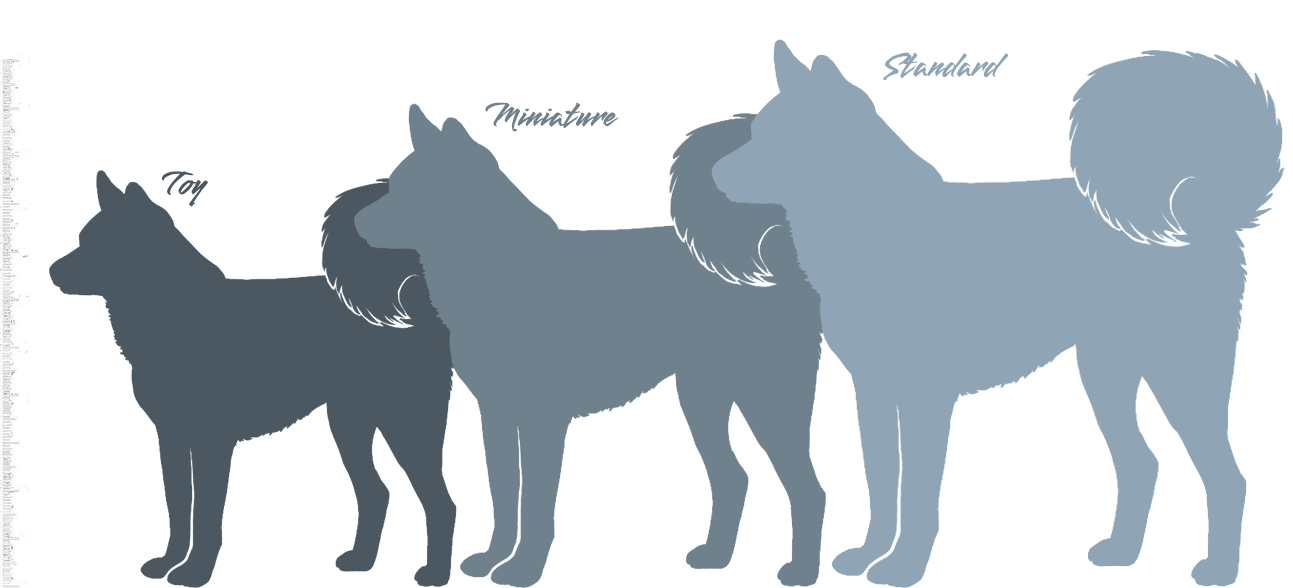
AKK are fully recognized by the United Kennel Club (UKC) and come in three acceptable sizes (based on height): toy, miniature, and standard. Weight is not monitored, but is expected to be proportional to their general size.
- Toys are measured to be up to and including 13 inches (33 cm) with an average weight of up to 9 pounds (4.1 kg).
- Miniatures are measured to be over 13 inches (33 cm) and up to and including 15 inches (38 cm) with an average weight of 10 - 15 pounds (4.5 - 6.8 kg).
- Standards are measured to be over 15 inches (83 cm) and up to and including 17½ inches (44.5 cm) with an average weight of 16 - 22 pounds (7.3 - 10.0 kg).
Alaskan Klee Kai measuring over 17½ inches is considered
oversized and is a disqualification per the UKC and AKC breed standards for conformation. (However, it does not affect the dog in any way and just equals more dog to love, and it can be beneficial in some sports!)
Note: The American Kennel Club does not recognize these size varieties, thus all dogs of every size will compete against each other within the same class and can be interbred. The AKC recognizes the Alaskan Klee Kai heights to be from 12 inches to 17 inches, with a height of over 17½ inches as a disqualification.
The Alaskan Klee Kai can come in four main coat colors (and their varying shades): black and white, gray and white, red and white, and pure white. White is considered a disqualification in the show ring and most of the recognized reputable AKK breeders will not actively pursue to produce the color (as the gene responsible is able to be tested for). However, white is still required to be present and starkly contrast with the main coat color with no additional markings in the following locations: inside the ears, on the lower half of the head, on the neck, on the undersides (including the tail), inside the legs, and the paws. A full facial mask is a defining characteristic of the breed and is the most desirable. Stars and blazes are acceptable, but not desirable. Widow's peak, open face, or bald faces are the least desirable and can be considered as having no mask, which is a disqualification. As with many Nordic breeds, markings are expected to be symmetrical under all accounts.
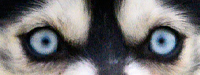
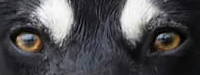
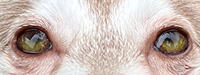
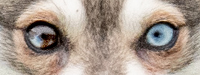
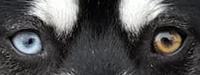
Eyes of Klee Kai come in a variety of colors and patterns. The colors they can be include brown, blue, or green/hazel (found in red coated dogs). Patterns include solid (all one color) and parti (expressed as parts of two colors), and they can be seen as double (both eyes are the same) or bi-eyed (each eye is different). There is no preference of colors or patterns, which allows us to see such a large variety of the possible combinations!
The Alaskan Klee Kai is generally a healthy breed, but there is still a lot we don't know as the breed has potentially not been established long enough to determine shared issues and common patterns, along with the consistent developments in canine genetics and testing. At the present moment, it has been agreed upon amongst reputable breeders to test their breeding stock through the Orthopedic Foundation for Animals (OFA) for thyroid, patellas, cardiac, and eyes, and a DNA test for Canine Factor VII Deficiency (CFVII) through a reputable laboratory. While other tests can be completed to pursue more knowledge of the individual dog or the overall breed, the OFA and CFVII tests are designated to be minimum requirements.
CFVII
Canine Factor VII Deficiency (CFVII) is a hereditary recessive disorder that affects the coagulation of blood (blood clotting) that results in an increased risk of excessive bleeding after injury or surgery. While it is not fatal on its own, it can cause complications and make trauma and medical procedures more serious. This genetic disorder may have found its way into the Klee Kai genepool with the Alaskan Husky foundation stock prior to testing being available. There are DNA tests available to detect the presence of the responsible mutation. Aspen Veil currently uses GenSol Diagnostics to test for this disorder.
THYROID
The thyroid is responsible for more than one would expect as the hormones it secretes (thyroxine [T4] and triiodothyronine [T3]) regulate the metabolism of the body's cells. When too many of those hormones are released, the cells work faster than they should, resulting in hyperthyroidism, which eventually cause organ failure if left untreated. On the opposite end, if the thyroid produces too little, it can cause hypothyroidism, which could result in weight gain and eventually organ failure due to the body's needs not being met. While either condition is not commonly found in the breed without an underlying issue, they are susceptible to autoimmune thyroiditis, which is when the dog's immune system will attack the thyroid, which will be apparent when the dog shows symptoms and potentially diagnosed with hypothyroidism due to the cycle of inflammation and resulting scar tissue.
PATELLAS
AKK are expected to have their patellas tested due to the high number of occurences of patella luxation amongst the American Eskimo and the Schipperke, two of the foundation breeds used for the AKK's development. Luxations may not be present until later in life, but the deformities that can attribute to the development of the disease will be apparent early in life, thus it can be considered a hereditary condition. Patellas can be tested considerably early in comparison to others, but the most dependable results would be after the dog's growth plates are fully closed around 12 to 18 months.
CARDIAC
AKK are prone to congenital heart murmurs. While some may grow out of it, some may not by the time they're adults. Just like a human, a heart murmur in a dog is not necessarily life-threatening and is not a definite sign heart disease is in their future, sometimes extra precautions may be necessary to prevent injury or worsening of the murmur. A dog can live a full, happy, healthy life just fine! To prevent the possibility of inheritance, however, dogs should be screened before breeding.
EYES
It is not unusual for eyes to be regularly tested throughout the dog's life as they change as they grow older. One condition that has been found in the breed is distichiasis, which is an inherited condition where extra eyelashes grow in an unusual location on the eyelid, typically growing inward against the eyeball, causing excessive tearing, conjunctivitis, and corneal scarring. This condition is usually only repaired with a surgical procedure called cryoepilation, in which involves freezing the hair follicles with liquid nitrogen and removing the individual hairs.
HIPS
Aspen Veil has opted to test hips of our dogs. While hip dysplasia and other hip issues are not genetically prevalent in the breed, it can still be developed if the joints don't develop correctly or growth plates do not close properly. When this condition develops, it can cause discomfort and pain, and can eventually lead to mobility limitation, arthritis, and muscle atrophy. Premature heavy activity as puppies can affect the immature joints and lead to late-term HD. It is not uncommon knowledge that HD can be seen in the early foundation breeds, so making sure if there isn't potential of a genetic factor being present or reintroduced into the genepool will benefit the breed as a whole. Due to their size, hip dysplasia may remain asymptomatic until their geriatric years.
ELBOWS
Aspen Veil has also chosen to test elbows of our dogs. While elbow dysplasia is not prevalent in the breed, our dogs heavily depend on their front legs for weight-pulling, agility and running, and their normal activities. Elbow dysplasia is abnormal development of the elbow joint, which can result in complications with the movement and versatility of the dog's physical abilities. While elbow dysplasia is usually considered genetically predetermined, overexertion of the joints before a puppy's growth plates have closed can cause the joints to develop incorrectly based on environmental factors. Deciphering if it was developed due to genetics or environmental factors can be difficult, but may possibly be linked as well.
CRYPTORCHIDISM
Cryptorchidism is the failure of one or both testes to descend into the scrotum. Both testicles are usually descended by two months of age, but may take longer. A dog may be considered cryptorchid by a veterinarian if both have not dropped by six months. It is not out of the norm for small dogs to take more time and AKK are not an exception. However, this condition may have found its way into the gene pool through the Siberian Husky, one of the foundation breeds that is prone to cryptorchidism. While male dogs can live with retained testicles, neutering is advised to prevent the higher probability of testicular cancer. Additionally, affected dogs should not be bred. It is not necessarily heritable, but the factors that contributed to the issue can potentially be passed down.
The Alaskan Klee Kai Pedigree Database is an online breed-exclusive database used to keep track of all Alaskan Klee Kai that was launched in 2007. While it heavily depends on the submission from breeders and owners, it does have a decent amount of dogs and proves as a great reference for tracing down a dog's history. Originally, it was a private database; however, it is now available for public viewing with a public login. To access the database, please use these login credentials:
Username:
ezguest
Password:
ezguest